
 Video
Video
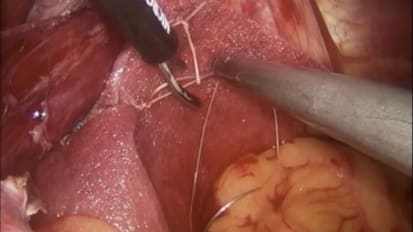
Retromuscular Hernia Repair Using GORE® SYNECOR Preperitoneal Biomaterial with Transfascial Suture Fixation
John P. Fischer, M.D., MPH, FACS, is a specialist in abdominal wall reconstruction. This is a surgical technique video demonstrating the retromuscular repair using GORE® SYNECOR Preperitoneal Biomaterial with transfascial fixation. Document
Virtual Case Study: Visible Tissue Responsiveness: Metabolic and Fibroblast Activity During Utilization of a Bioabsorbable Matrix in Abdominal Wall Reconstruction
 Video
Video
Paraesophageal Hernia Repair Using GORE BIO-A Tissue Reinforcement
William S. Cobb, IV, M.D., FACS, shares a video showing paraesophageal hernia repair using GORE BIO-A tissue reinforcement.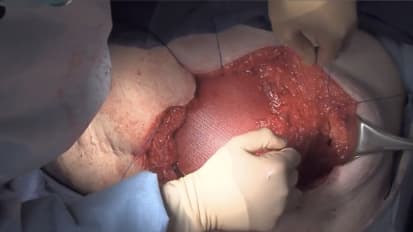 Video
Video
Ventral Hernia Repair Using the Components Separation Technique
Brent Mathews, M.D., FACS, performs a ventral hernia repair using the components separation technique. Document
Long-term Outcome of Absorbable Synthetic Mesh in Clean Ventral Hernia Repairs
The use of absorbable synthetic mesh in clean wound ventral hernia repair resulted in favorable long-term recurrence rates.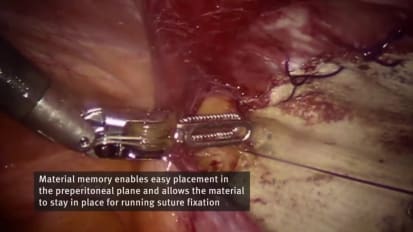 Video
Video
Robotic Preperitoneal Umbilical Hernia Repair
Robotic preperitoneal repair of an umbilical hernia utilizing GORE® SYNECOR Preperitonal Biomaterial by Matthew R. Reynolds, D.O. Video
Video
Laparoscopic Ventral Hernia Repair using GORE® SYNECOR® BioMaterial
Carl R. Doerhoff, MD, FACS, practices in SurgiCare in Jefferson City, Missouri, presents the use of the GORE® SYNECOR® BioMaterial Laparoscopic ventral hernia repair.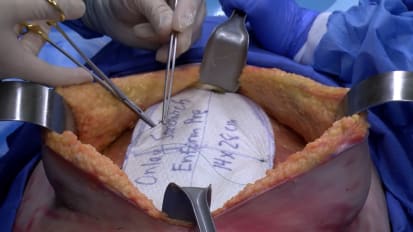 Video
Video
Retromuscular Onlay Hernia Repair Using GORE® ENFORM Preperitoneal Biomaterial
This is an educational surgical technique video demonstrating a retromuscular onlay hernia repair using GORE® ENFORM Preperitoneal Biomaterial. A cadaver model is used for demonstration to facilitate visualization of the anatomy. This educational content provided by John P. Fischer, M.D. Document
Bioabsorbable Mesh for Hernia Repair: Know your Options
GORE® BIO-A® Tissue Reinforcement is intended for use in the reinforcement of soft tissue. GORE® BIO-A® Tissue Reinforcement may be used include hernia repair as suture-line reinforcement, muscle flap reinforcement, and general tissue reconstructions. Document
A Patient’s Guide to Hernia Repair
While some hernia defects can disappear if they are pressed, this does not permanently resolve the hernia. In addition, because hernias typically worsen over time, the patient should consult a surgeon after a hernia has been identified.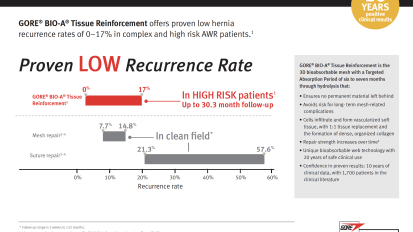 Document
Better AWR Outcomes. Reinforced by Data. GORE® BIO-A® Tissue Reinforcement offers low complication rates in complex and high-risk patients
GORE® BIO-A® Tissue Reinforcement offers proven low hernia recurrence rates of 0–17% in complex and high risk AWR patients. Document
Better AWR Outcomes. Reinforced by Data. Confidence for surgeons and patients in ventral hernia repair
GORE® BIO-A® Tissue Reinforcement is designed as an alternative to longer-term resorbable and permanent meshes to offer a strong repair while avoiding risk for long-term mesh-related complications